Technology
0 followers·28 articles
OpenAI’s Navier–Stokes Claim Shifts Focus to Verification
September 9, 2026
OpenAI says an internal AI system produced both an analytical proof and Lean formalization for a Navier–Stokes Millennium Prize problem resolution, but the immediate test is whether mathematicians can independently audit the public artifacts. The case may mark a shift in AI-assisted science, where papers, proof-checker code, agent workflows and provenance records all become part of the verification record.

10m

9m
At IFA Berlin, AI Robots Leave the Stage—but Not Yet for Everyday Life
IFA 2026 put humanoids, robot football, home companions and “Physical AI” at the center of the show, but many of the most striking systems remain controlled demonstrations. The clearest near-term progress is in specialized robots with defined jobs, while general-purpose home humanoids still need to prove perception, planning, manipulation and safety outside the exhibition hall.

4m
Elementor Pro flaw exposes WordPress sites to mass exploitation
A critical Elementor Pro vulnerability, CVE-2026-32475, is being exploited against WordPress sites, putting unpatched installations at risk of remote code execution and full site takeover. Administrators should update to Elementor Pro 4.2.2 or later and check upload directories and logs for signs of compromise.
7m
GitHub’s GPT-6 Astra rollout makes AI model choice an enterprise control layer
GitHub’s September Copilot updates show frontier coding models moving from optional developer tools into governed enterprise infrastructure. For engineering managers, the key issue is no longer which model performs best in isolation, but who can use it, on what code, at what cost and under which review controls.
Google’s Fairwind packages frontier cyber AI as gated defensive infrastructure
September 6, 2026
Google’s Fairwind program packages Gemini 3.8 Flash Cyber and CodeMender as a limited-access system for trusted defenders, emphasizing autonomous vulnerability discovery and verified patch generation inside secure cloud environments. The launch reflects a broader product shift: frontier cyber models are being deployed as controlled infrastructure, not broadly available developer tools.

7m

5m
Google makes agentic video processing an efficiency feature in the Gemini API
Google says Gemini Flash models can now navigate video dynamically instead of processing clips at a fixed frame rate, cutting token use by up to 88% and costs by up to 66% in company benchmarks. The shift makes agentic video understanding a developer-facing API capability for long-form search, anomaly detection and YouTube-grounded answers, not just a multimodal demo.

6m
StreamRat Android trojan uses social ads and sideloading flow to enable device takeover
StreamRat is being promoted through fake streaming-app ads on Meta and TikTok, with reporting tying one Meta campaign to roughly 570,000 users reached. The Android banking trojan combines sideloading guidance, Accessibility Services abuse, MediaProjection screen capture, VNC-style control, overlays and a fake VPN that disrupts internet access for other apps.

7m
Claude’s Fermat Formalization Tests AI on Research a Computer Can Verify
Anthropic says Claude produced a complete Lean formalization of Fermat’s Last Theorem in an 11-day, largely autonomous workflow. The milestone is less about discovering new mathematics than about whether AI agents can do long-horizon research when every accepted step must survive deterministic verification.
Google WeatherNext 3 Brings AI Forecasting to Products, APIs and Energy Planning
September 5, 2026
Google DeepMind and Google Research’s WeatherNext 3 adds real-time satellite data, hourly refreshes and higher-resolution forecasts as the company embeds AI weather intelligence across Search, Gemini, Maps, Google Cloud and Earth Engine. The release points to a broader shift: AI weather models are becoming operational infrastructure for consumers, developers and clean-energy planners.

5m
6m
Nvidia PAIR turns local AI into a networked inference layer
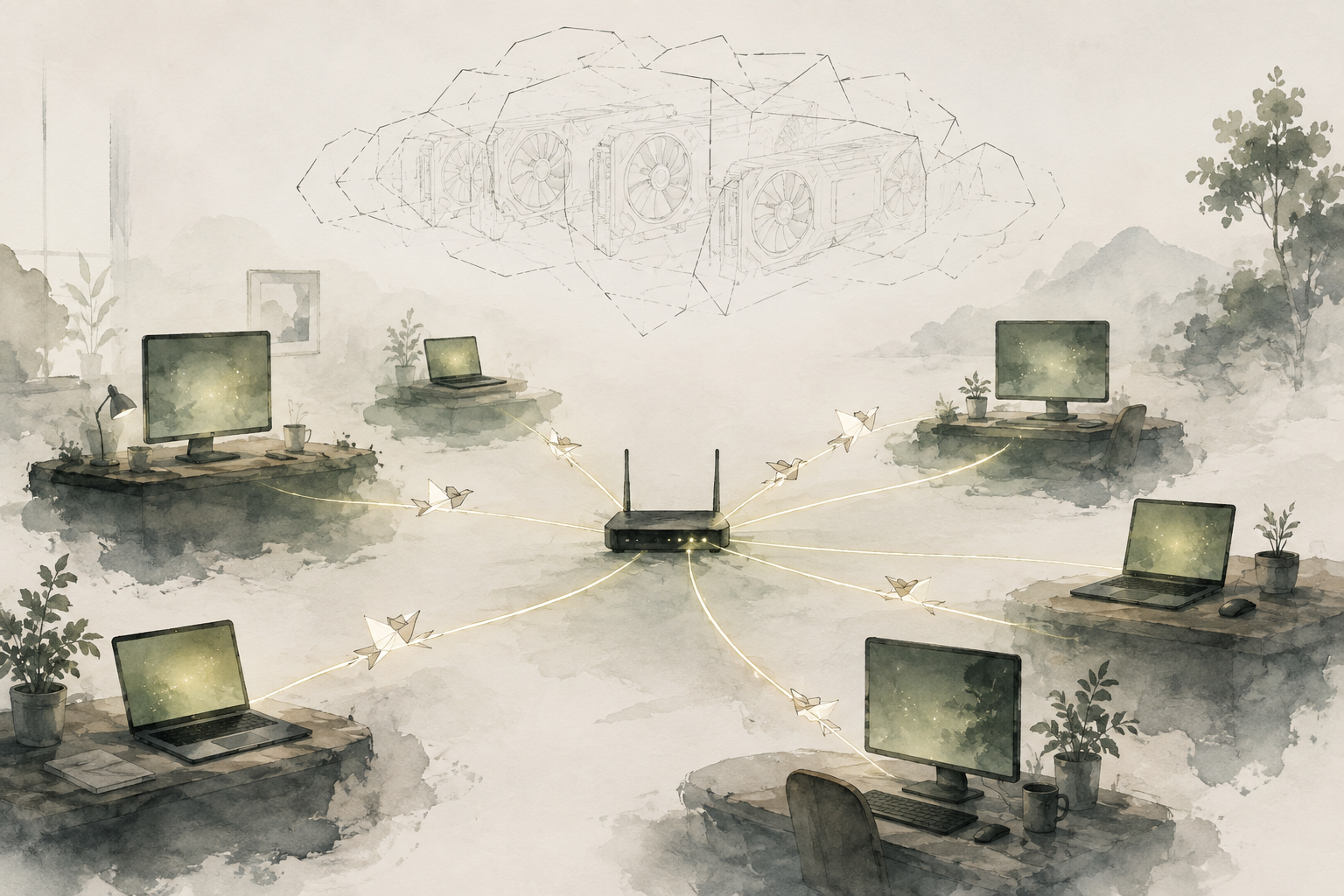
Nvidia’s Personal AI Router, or PAIR, is designed to route local AI inference requests across compatible machines on the same network while preserving familiar Ollama- and OpenAI-compatible endpoints. The beta software distributes independent requests, but it does not pool GPU memory, shard models or turn several computers into one virtual GPU.

6m
Microsoft positions Project Zenith as a Windows 11 baseline for local AI development
Microsoft’s Project Zenith packages high-memory Windows 11 PCs, local 30B-plus-parameter model support, WSL/container tooling and agent security controls into a developer-ready configuration. The move positions Windows as an on-device AI engineering platform at a time when teams are trying to reduce dependence on metered cloud inference.

7m
Cloudflare adds OpenAI Daybreak models to vulnerability remediation, with humans approving fixes
Cloudflare’s new Managed Defense capability uses OpenAI Daybreak models to help investigate authorized code, prioritize vulnerabilities with production context, and propose patches or WAF mitigations. The launch shows AI security products moving into hosted remediation workflows, but also highlights unresolved operational questions about data access, model boundaries, and approval controls.
Nvidia’s DLSS 5 puts generative rendering inside the live graphics pipeline
September 3, 2026
DLSS 5 arrives September 3 with NBA 2K27, but its first release is narrower and more consequential than a typical DLSS update: one game, RTX 50-series hardware, GeForce NOW, and a new neural rendering pass that changes rendered frames rather than only scaling or interpolating them.

8m

6m
Google’s September Android Drop brings Gemini further into daily phone tasks
Google’s September 1 Android Drop adds Gemini-powered item memory in Find Hub, Guided Vision in Gemini Live, Motion Assist, Google Messages themes and Keep-based checklist sharing. The update shows Google positioning Gemini as operating-system infrastructure for context, accessibility and communication rather than only as a standalone chatbot.
7m
Project Watershed 250 tests AI cyber tools for water-utility risk reduction
The six-month Texas pilot will put red teaming, OT vulnerability assessment, exposure management, hardening and AI-assisted defense into water and wastewater utilities that often lack cyber staff. Its engineering test is whether vendors and officials can produce remediation evidence strong enough to justify scaling the model beyond Texas.
5m
CrowdStrike Expands QuiltWorks to Strengthen Falcon SIEM as AI-Security Control Plane
CrowdStrike said Project QuiltWorks now brings real-time partner telemetry into Falcon Next-Gen SIEM, extending the platform beyond log collection toward exposure prioritization and agent-assisted remediation. The expansion tests whether broader data pipelines and AI agents can shorten the window between vulnerability discovery and response.
Claude session theft highlights limits of password-based AI account security
August 31, 2026
Anthropic is warning affected Claude users that commodity infostealer malware stole active login sessions and let attackers consume paid usage without requiring a new password or two-factor challenge. The incident highlights why AI subscriptions, usage credits and agent-connected workflows are becoming operationally valuable targets.

6m

6m
Photo by on
Cloudflare Adds Self-Updating Bot Defense as AI Accelerates Automation Threats
Cloudflare’s Adaptive Intelligence adds live-traffic retraining and short-lived automated rules to Bot Management, aiming to make bot attacks harder to sustain. The launch points to a broader shift toward continuously updated defenses as AI lowers the cost of credential stuffing, scraping and bot-framework bypasses.

5m
Photo by on
Samsung brings flagship AI to a lower-cost Galaxy S26 FE
Samsung’s Galaxy S26 FE puts Galaxy AI, One UI 9 and long-term software support into the company’s Fan Edition line, testing whether premium phone software can move down-market without feeling compromised.
5m
Photo by on
Citrix NetScaler KEV Deadline Passes as DoS Bug Raises RCE Concerns
CISA’s August 29 deadline for federal agencies to secure affected Citrix NetScaler appliances has passed, putting renewed pressure on enterprises to verify patch status, exposure, and compromise evidence. The case shows how quickly an edge-device flaw can move from denial-of-service advisory language to active-exploitation response.

You've reached the end