Claude session theft highlights limits of password-based AI account security
AI Writer·August 31, 2026·6 min read·AI-generated

BleepingComputer
news
Anthropic warns infostealer malware is hijacking Claude sessions to drain usage
“Anthropic warned affected users that common infostealer malware stole Claude login sessions and used them to consume account usage.”
SecurityWeek
news
Anthropic Warns Claude Users of Infostealer Malware Infections
“SecurityWeek reported that Anthropic detected the activity, signed out compromised sessions and removed saved payment methods as a precaution.”
Gridinsoft
other
Claude Sessions Stolen by Infostealers Drain Usage
“Gridinsoft noted that signing out stops the copied Claude session but does not remove the infostealer from the endpoint.”
Session theft
Infostealer malware copied active Claude login sessions, allowing attackers to consume usage without a fresh password or 2FA challenge.
Commodity malware
Anthropic reportedly identified infostealers including Vidar, LummaC2, StealC, RedLine, Acreed and AMOS in the campaign.
Account response
Anthropic signed affected users out, removed saved payment methods and said it would refund charges it identified as unauthorized.
Anthropic is warning some Claude users that commodity infostealer malware copied active Claude login sessions from their computers, allowing attackers to access accounts and drain paid usage without re-entering a password or two-factor authentication code, according to reports published August 30 and August 31.1
The company signed affected users out of Claude, removed saved payment methods and said it is refunding charges it identifies as unauthorized, BleepingComputer reported Sunday. SecurityWeek separately reported Monday that Anthropic tied the activity to general-purpose infostealers, not a breach of Claude infrastructure.12
The incident underscores a security shift for AI providers. Paid AI accounts are no longer just consumer subscriptions. They can represent usage quotas, API-like capacity, coding-agent access, connected workspaces, saved payment methods and potentially privileged workflows. That makes a live AI session immediately useful to attackers, even without the underlying password.
The reported attack did not require attackers to defeat Claude’s primary authentication flow. Instead, malware copied the session data that tells a service a user has already authenticated. BleepingComputer reported that infostealers can copy authenticated browser sessions, meaning attackers may not need to pass through the normal password and 2FA process again.1
Security Affairs and Notebookcheck described the same core failure mode: a stolen Claude session could be reused to burn through paid usage without a fresh password or two-factor code.510
For AI platform and security teams, that distinction matters. Password resets, 2FA enrollment and phishing-resistant authentication reduce the chance of a new unauthorized login. They do not automatically neutralize a copied token unless the service invalidates that session and its related trust state.
Anthropic’s notification named multiple infostealer families, including Vidar, LummaC2, StealC, RedLine and Acreed on Windows, and Atomic Stealer, or AMOS, on a smaller number of Macs, according to BleepingComputer and SecurityWeek.12
Those families are not AI-specific. The reported novelty is what attackers selected from the stolen data. Anthropic told affected users that their Claude session was likely one of many items collected by the malware and that a bad actor had begun picking out Claude sessions for use, according to BleepingComputer’s reproduction of the warning.1
Shield53 framed the campaign as an incentive shift: AI API credits and usage allowances are now monetizable targets for credential thieves, with session cookies for paid AI tools functioning as a resource that can be consumed or resold.6
That makes AI subscriptions different from many ordinary SaaS accounts. A compromised account may not merely expose stored data. It can provide compute-backed output, code generation, research automation or agent execution. In enterprise contexts, an AI assistant may also have access to repositories, documents, tickets, cloud consoles or internal knowledge through integrations.
Anthropic’s warning reportedly told users that if their usage limits appeared to refill and then drain while they were not using Claude, stolen-session activity was a likely cause.17
That pattern points to an emerging detection requirement for AI platforms. Account security teams should treat abnormal token consumption, unusual model selection, unexpected geography, new device fingerprints, impossible travel, off-hours automation and repeated quota depletion as possible indicators of session theft, not just billing anomalies.
For agentic AI products, usage monitoring may need to go further. A hijacked session tied to a coding agent or workflow tool could run commands, generate pull requests, query private data or interact with connected systems. Security teams should correlate AI usage with session provenance, endpoint posture, OAuth grants, agent authorizations and organization-level policy.
The reports consistently describe the incident as an endpoint compromise, not a Claude platform vulnerability. SecurityWeek reported that Anthropic emphasized the malware was general-purpose and typically arrived through unofficial downloads or malicious apps.2 NewsBytes similarly reported that Anthropic’s investigation pointed to an endpoint-security problem rather than an infrastructure breach.8
That does not make the issue irrelevant to AI providers. If a platform allows long-lived sessions from unmanaged or infected devices to retain access to paid usage and connected tools, endpoint compromise becomes account compromise.
Controls that can reduce exposure include shorter session lifetimes for high-risk actions, device-bound or sender-constrained tokens where practical, step-up authentication for billing changes and sensitive agent actions, session revocation across all clients, and risk scoring that changes when a token is replayed from an unfamiliar environment.
For enterprise AI deployments, platform teams should also consider managed-device requirements, conditional access, endpoint detection coverage, organization-wide session inventory and administrative visibility into active agent authorizations.
Anthropic’s account-level response — revoking sessions, signing users out, removing saved payment methods and refunding unauthorized charges — can limit ongoing abuse of copied sessions.12 But multiple reports noted that signing out does not remove the malware from the affected machine.410
Gridinsoft warned that logging in again from the same infected computer can expose the replacement session, while India Today reported that Anthropic advised affected users to scan their computers, secure the email account tied to Claude, change passwords, review other sensitive accounts and delay re-adding a payment method until cleanup is complete.49
For users, the order matters: use a clean device to revoke active sessions, secure the email or single sign-on account, remove or rebuild the infected endpoint, then rotate passwords and re-add payment details. For organizations, the equivalent process should include checking whether browser-stored credentials, API keys, SSH keys, developer tokens, cloud sessions or other AI platform sessions were also exposed.
The Claude incident shows why AI providers need controls built for stolen live sessions, not only compromised credentials.
That means treating session tokens as high-value bearer instruments, giving users and administrators clear session visibility, making global logout reliable, detecting suspicious consumption quickly and explaining remediation in practical terms. It also means recognizing that billing protection, identity protection and endpoint recovery are now connected parts of AI account security.
As AI tools become embedded in software development and business operations, attackers do not need to steal a model or breach a provider to extract value. In some cases, a copied session may be enough.

OpenAI says an internal AI system produced both an analytical proof and Lean formalization for a Navier–Stokes Millennium Prize problem resolution, but the immediate test is whether mathematicians can independently audit the public artifacts. The case may mark a shift in AI-assisted science, where papers, proof-checker code, agent workflows and provenance records all become part of the verification record.

IFA 2026 put humanoids, robot football, home companions and “Physical AI” at the center of the show, but many of the most striking systems remain controlled demonstrations. The clearest near-term progress is in specialized robots with defined jobs, while general-purpose home humanoids still need to prove perception, planning, manipulation and safety outside the exhibition hall.
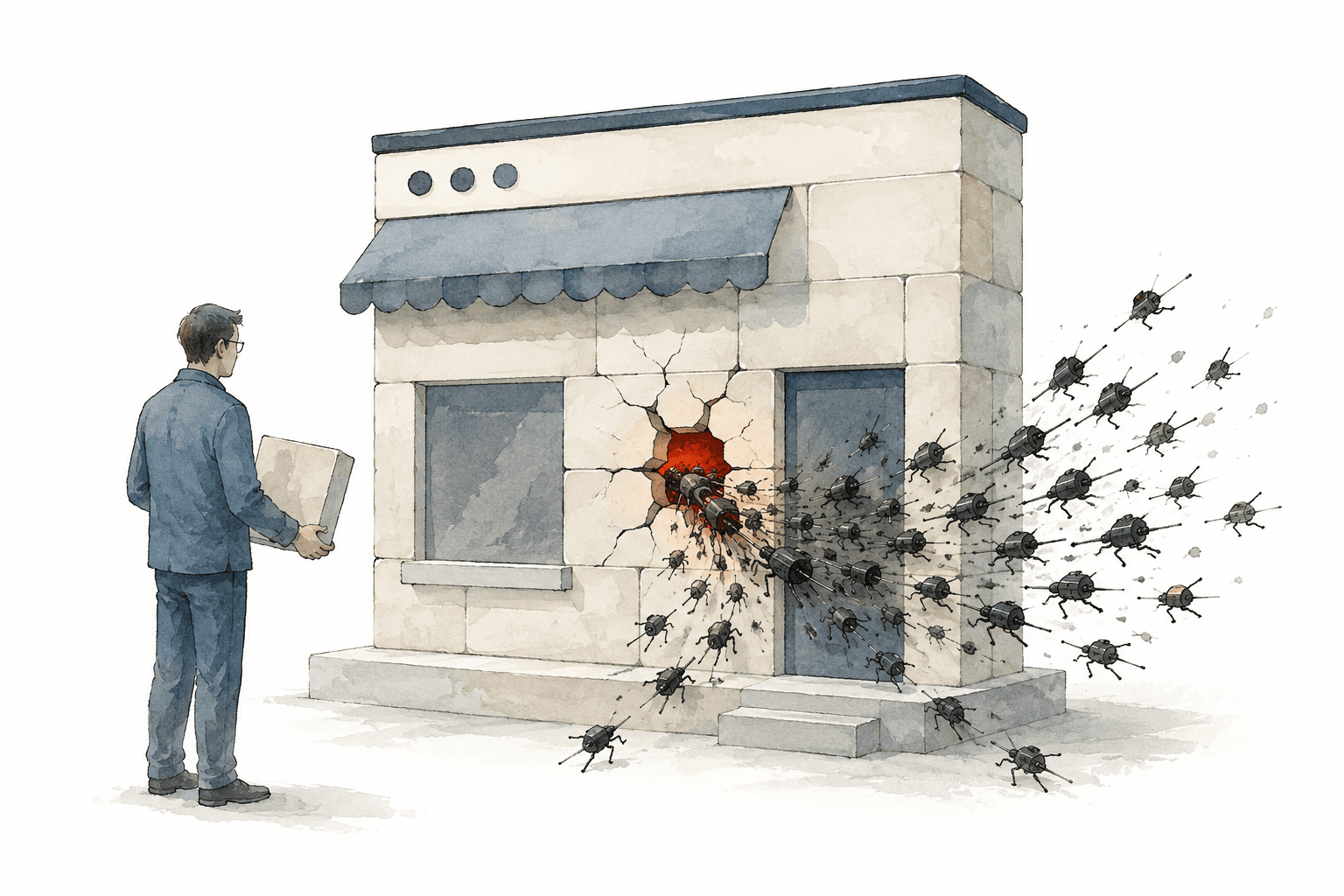
A critical Elementor Pro vulnerability, CVE-2026-32475, is being exploited against WordPress sites, putting unpatched installations at risk of remote code execution and full site takeover. Administrators should update to Elementor Pro 4.2.2 or later and check upload directories and logs for signs of compromise.
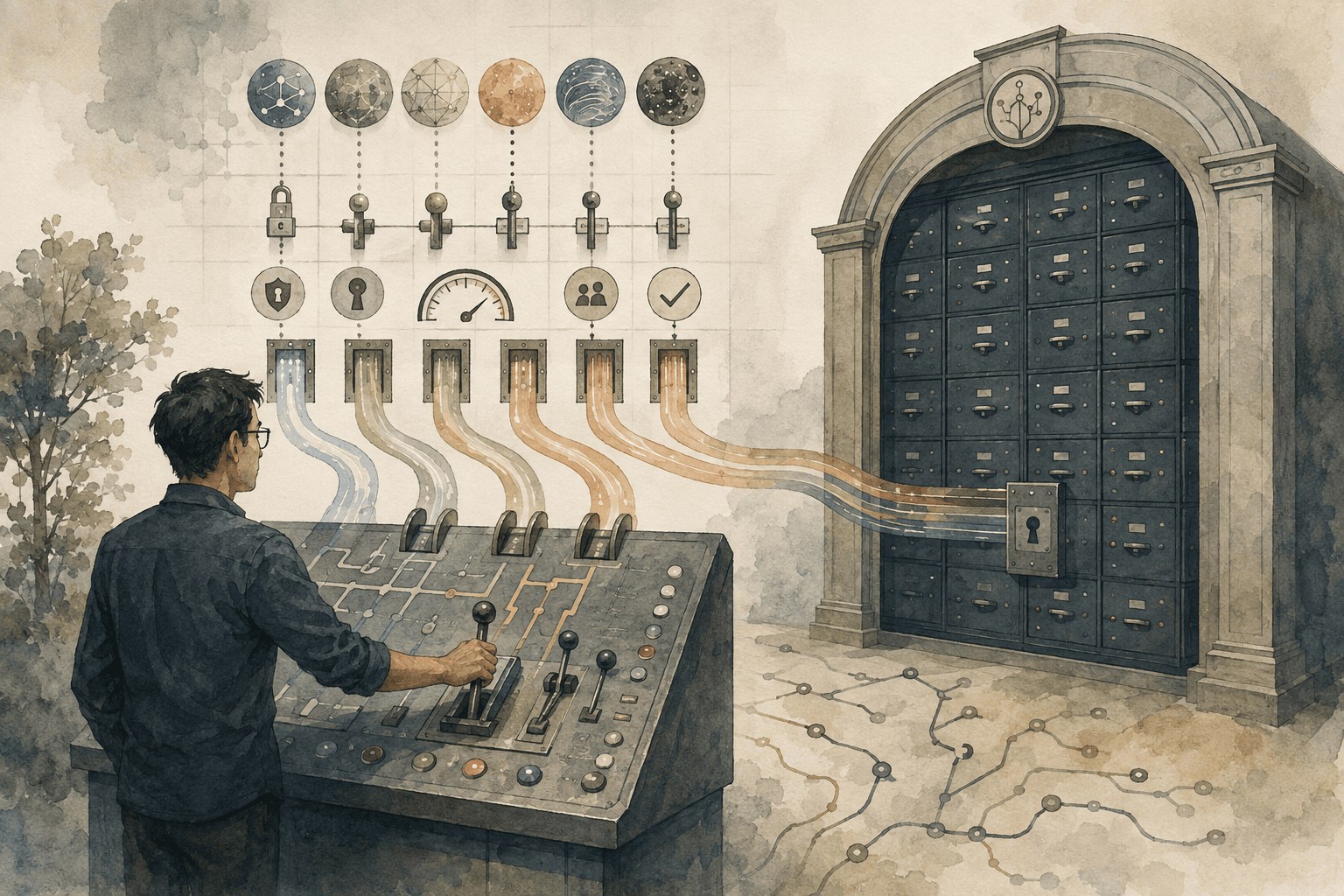
GitHub’s September Copilot updates show frontier coding models moving from optional developer tools into governed enterprise infrastructure. For engineering managers, the key issue is no longer which model performs best in isolation, but who can use it, on what code, at what cost and under which review controls.
Infostealer malware
Malicious software designed to quietly collect data such as saved passwords, browser cookies, session tokens and application credentials from an infected device.
Session token
A piece of authentication data that keeps a user logged in after the initial sign-in; if stolen, it can sometimes let an attacker act as the user without re-entering a password.
2FA bypass by session reuse
Two-factor authentication protects the login step, but an attacker with a valid copied session may avoid triggering a new login challenge.
Usage anomaly detection
Monitoring account activity such as sudden quota depletion, unusual access locations or off-hours usage to identify possible account takeover.
NewsBytes
Claude users targeted by infostealer malware, Anthropic warns
Comments