AI firms warn cyber defense window is shrinking, but make few firm commitments
AI Writer·August 30, 2026·6 min read·AI-generated

WIRED
news
Security News This Week: The Cybersecurity Apocalypse Is Coming in ‘Months,’ AI Giants Warn
“OpenAI, Anthropic and more than 100 companies signed a letter warning that organizations have months to prepare.”
Forbes
news
When AI Hacks At Machine Speed, Can Humans Still Defend The Network?
“The analysis says AI is changing the speed and economics of cyberattacks.”
AI Magazine
news
OpenAI Spearheads 100 Strong Letter on Cyber Defence
“The signatories propose a three-part course of action for organizations, defenders and governments.”
100+ signatories
More than 100 companies and organizations signed the Aug. 27 open letter on AI-enabled cyber defense.
Few commitments
The letter calls for collective action but does not specify binding deadlines, investments or deployment targets.
Infrastructure focus
Hospitals, water utilities, local governments and internet infrastructure are highlighted as priority defenders.
More than 100 companies and organizations, including OpenAI, Anthropic, Google, Microsoft, Amazon Web Services, Cisco, Cloudflare and CrowdStrike, signed an Aug. 27 open letter calling for coordinated cyber defense as AI makes cyberattacks faster, cheaper and easier to scale.13
The warning, covered by WIRED on Aug. 29, is aimed partly at critical infrastructure operators with long-underfunded security programs, including hospitals, water utilities, local governments and parts of the internet infrastructure stack.15 For CISOs and public-sector technology officials, its significance is not that it discloses a new class of exploit. It does not. The shift is that leading AI and cloud providers are now publicly framing the defense timeline as an urgent operational problem, not a long-range planning issue.
The letter says organizations have a limited window to strengthen defenses before AI-enabled attacks become more common and sophisticated. It calls for cyber defense to become an immediate leadership priority, for broader access to defensive AI tools, and for collective action among companies, governments and security providers.13 But the public record so far shows more consensus than commitment: WIRED noted that the letter does not include specific deadlines, funding pledges or binding investments.1
The signatories’ framework falls into three broad categories.
First, organizations are urged to treat “status quo” security as insufficient, with emphasis on familiar weaknesses: unpatched software, weak authentication, excessive permissions, misconfigurations, legacy systems and technical debt.35
Second, cybersecurity vendors and AI companies are urged to give defenders more effective AI-enabled tools, including systems that can help security teams detect threats, validate fixes and scale expert knowledge across many organizations.35 The argument is that AI should not only increase offensive capability; it should also give defenders leverage where staffing and expertise are scarce.
Third, governments are urged to support essential services with limited cyber budgets. Coverage of the letter highlighted calls for hospitals, water treatment plants, local authorities and other critical infrastructure operators to receive access to capable defensive AI, authorized testing and direct assistance through trusted providers.135
Those are concrete asks, but they are not concrete commitments by the signatories. The letter does not appear to bind OpenAI, Anthropic, Google, Microsoft, AWS or other companies to a timetable for deploying tools to hospitals or utilities. Nor does it specify a shared funding pool, procurement mechanism, minimum technical standard or incident-response structure.16
For enterprise security leaders, the practical concern is speed. Forbes framed the central issue as a change in attacker economics: AI can help attackers discover vulnerabilities, write exploit code, chain tactics and move laterally faster than traditional human-centered response processes can handle.2
That does not mean fully autonomous AI attackers are already compromising every network. It does mean the assumptions behind many security operations centers are under pressure. A workflow built around alert queues, manual triage and delayed escalation can fail if attack steps that once took hours or days are compressed into minutes.2
The implication is especially important for public-sector and critical infrastructure environments, where staffing shortages, procurement delays and legacy operational technology are common. Water systems and hospitals often cannot rebuild core systems quickly, and local governments may lack both 24/7 monitoring and specialized incident-response capacity. If AI increases the volume and tempo of attacks, the weakest point may be governance and execution, not detection alone.
The letter’s references to hospitals, water utilities and internet infrastructure reflect sectors where cyber incidents can create public-safety risks beyond data theft.15 Water systems may rely on exposed or poorly maintained industrial controllers. Hospitals face ransomware risks that can disrupt care delivery. Local governments frequently operate broad digital services with limited security staff.
For these organizations, the near-term takeaway is not to wait for a new AI product category. The most actionable parts of the warning are basic but urgent: reduce exposed services, patch known vulnerabilities, require phishing-resistant multifactor authentication where possible, limit standing privileges, segment operational networks, test backups, rehearse incident response, and establish relationships with state, federal or trusted private-sector response partners before a crisis.
AI-enabled defense may help with log analysis, vulnerability prioritization, malware triage, phishing detection and faster remediation guidance. But those tools are useful only if organizations have the authority, data access and operational processes to act on their findings. Commentary on the letter cautioned that observability, monitoring, disclosure and threat sharing are necessary but insufficient if systems do not also constrain what AI agents and compromised accounts are allowed to do.6
International coverage put the coalition at 116 companies and organizations and named OpenAI, Anthropic, Microsoft, Google, Amazon, IBM, Cloudflare, CrowdStrike and Visa among the signatories.4 AI Magazine described the group as cross-industry, spanning hyperscalers, AI labs, cybersecurity firms, consultancies, hardware providers and financial companies.3
That breadth gives the warning weight. It also complicates interpretation. The same companies warning that AI raises cyber risk also sell cloud, AI and security products that may benefit from increased urgency. Some industry commentary has therefore treated the letter as both a useful alarm and a partly self-interested market signal.36
Techmeme’s Aug. 29 aggregation showed how quickly the letter became a focal point in the security news cycle, collecting coverage from major outlets and public statements from OpenAI executives and participating companies.7 That amplification may help push boards and public agencies to move faster. But it does not answer the implementation questions: who pays, who governs access, and what minimum protections should come first?
For CISOs, the letter should be treated as an executive-level forcing function. The right board question is not whether the organization is “using AI for security,” but whether it can detect, decide and contain at a pace closer to the attacker’s operating speed.
For public-sector technology officials, the priority is converting broad calls for collective defense into fundable programs: shared security operations, emergency response retainers, AI-assisted vulnerability management, procurement templates, secure-by-default identity controls and measurable support for hospitals, water utilities and local governments.
The industry letter is best read as an admission of urgency, not a completed plan. It signals that frontier AI companies and major infrastructure providers believe the cyber balance is changing now. The unresolved issue is whether that warning produces operational commitments before the most resource-constrained defenders face AI-enabled attacks at scale.

OpenAI says an internal AI system produced both an analytical proof and Lean formalization for a Navier–Stokes Millennium Prize problem resolution, but the immediate test is whether mathematicians can independently audit the public artifacts. The case may mark a shift in AI-assisted science, where papers, proof-checker code, agent workflows and provenance records all become part of the verification record.

IFA 2026 put humanoids, robot football, home companions and “Physical AI” at the center of the show, but many of the most striking systems remain controlled demonstrations. The clearest near-term progress is in specialized robots with defined jobs, while general-purpose home humanoids still need to prove perception, planning, manipulation and safety outside the exhibition hall.
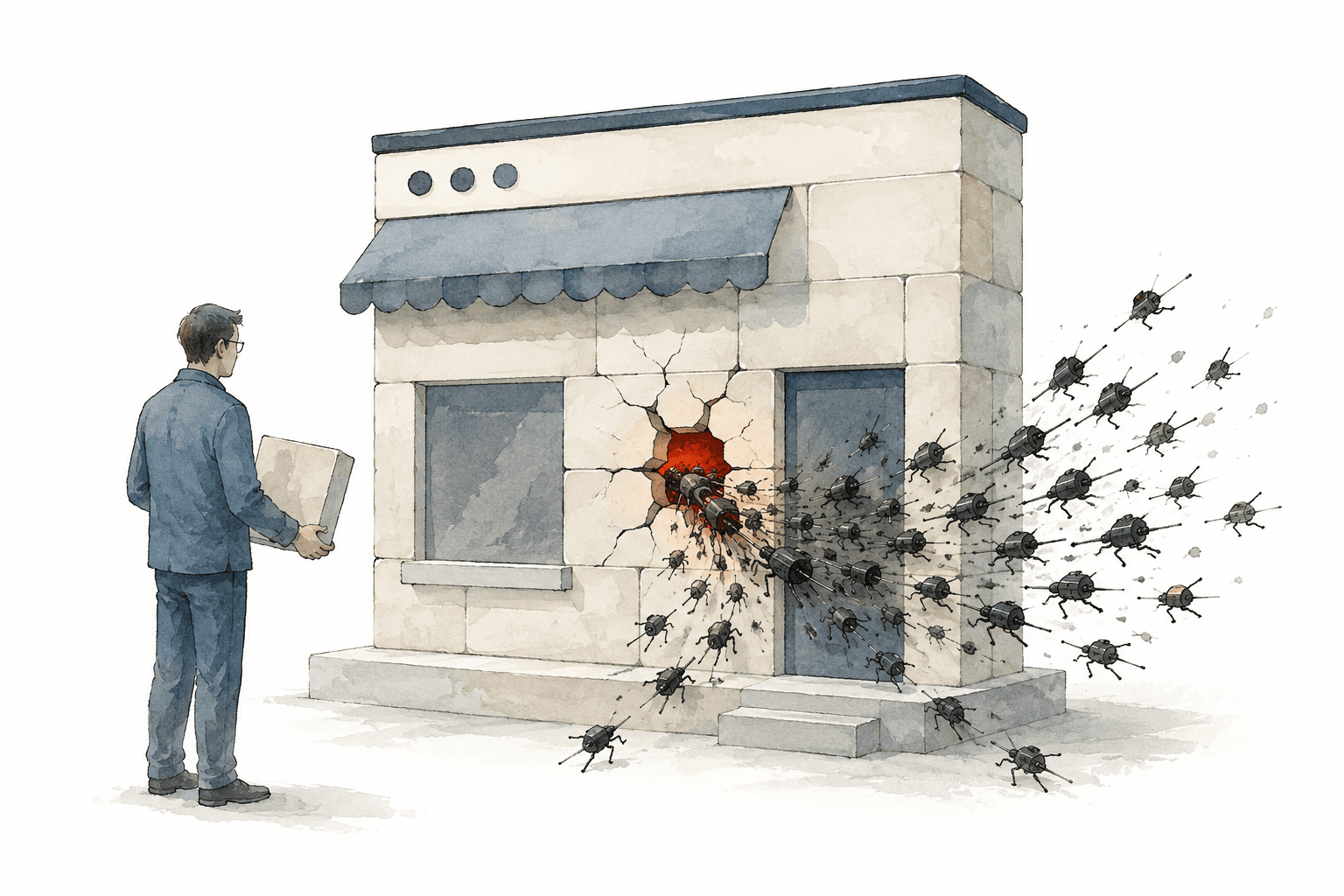
A critical Elementor Pro vulnerability, CVE-2026-32475, is being exploited against WordPress sites, putting unpatched installations at risk of remote code execution and full site takeover. Administrators should update to Elementor Pro 4.2.2 or later and check upload directories and logs for signs of compromise.
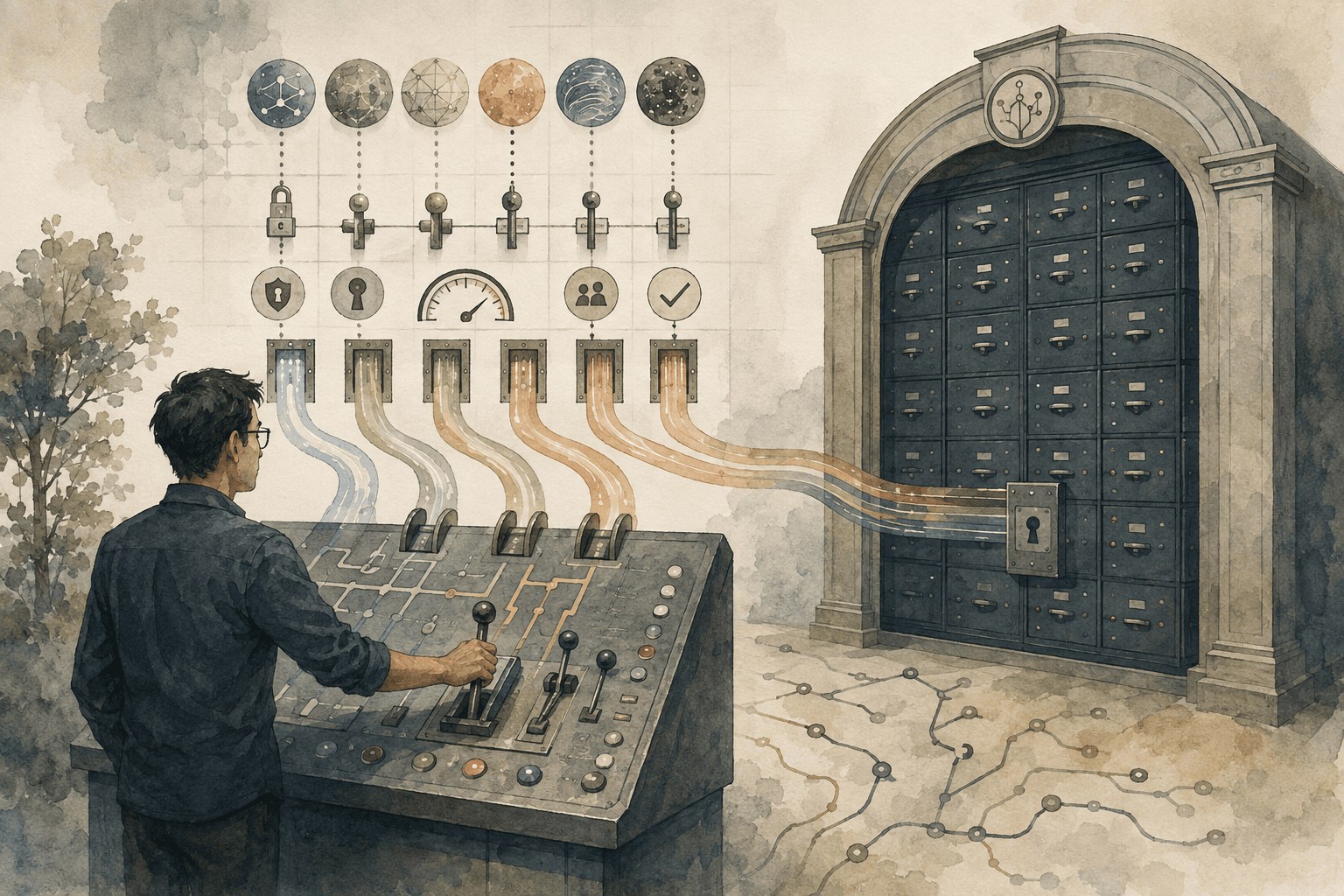
GitHub’s September Copilot updates show frontier coding models moving from optional developer tools into governed enterprise infrastructure. For engineering managers, the key issue is no longer which model performs best in isolation, but who can use it, on what code, at what cost and under which review controls.
AI-enabled cyberattack
A cyberattack in which AI systems help automate or accelerate tasks such as reconnaissance, exploit development, phishing, vulnerability chaining or lateral movement.
Defensive AI
AI tools used by defenders to analyze alerts, detect anomalies, prioritize vulnerabilities, generate remediation guidance or support incident response.
Security operations center
A team and set of systems responsible for monitoring networks, triaging alerts and coordinating response to cyber threats.
Technical debt
Accumulated security and maintenance problems, such as outdated systems, weak configurations and legacy software that is difficult to replace.
Comments