Nvidia frames agent safety as infrastructure, not model behavior alone

NVIDIA
other
NVIDIA Launches Open Agent Safety Platform to Secure Agents From Testing to Deployment
NVIDIA Technical Blog
other
NVIDIA Open Agent Safety Platform: A Reference for Continuous In-Silicon Agent Monitoring
NVIDIA Technical Blog
other
Add Runtime Controls to AI Agents with NVIDIA OpenShell
Open runtime
OpenShell is Nvidia’s open-source runtime for sandboxing agents, enforcing policy and logging decisions outside the agent workload.
Hardware watchdog
Sentry is a reference design that uses Nvidia BlueField-4 DPUs and DOCA for out-of-band monitoring, telemetry and enforcement.
Enterprise test
The platform may help contain agent misuse, but its effectiveness depends on correct policies, disciplined deployment and infrastructure placement.
Nvidia on Monday, September 28, introduced the Open Agent Safety Platform, a package that combines OpenShell runtime software with a Sentry reference system design for monitoring and quarantining AI agents that move beyond approved boundaries.1 The announcement frames agent safety as a systems-engineering problem: put enforceable controls below the model, log agent activity and use independent infrastructure to intervene when software-level boundaries fail.
For AI infrastructure and security leaders, the main distinction is what is actually open. Nvidia says OpenShell is open-source software that creates a runtime boundary for agents, traces actions and enforces policy. The company says it can be extended to third-party compute platforms, including Arm and Intel systems.1
The deeper Sentry enforcement layer, however, is a reference design built around Nvidia BlueField-4 data processing units, with Nvidia DOCA used for telemetry, identity checks and granular access enforcement.2
That split matters. OpenShell can be inspected, adapted and integrated into heterogeneous environments. But Nvidia’s strongest claim — that suspicious agents can be quarantined in milliseconds — depends on a hardware watchdog running out of band from the agent host.1
Nvidia says the platform is optimized for Vera CPU and BlueField DPU systems while remaining compatible with other hardware. Organizations already running Vera systems with BlueField-4 can enable the added protections through software, the company says.2
OpenShell 0.1.0 is designed to run agents inside sandboxes while enforcing limits outside the agent workload. Nvidia describes three key components: a gateway that manages sandbox lifecycles and policies, a supervisor that checks outbound requests, and a sandbox that applies kernel-level controls over files, processes and network paths.3
The runtime is meant to let an agent use necessary tools while preventing lateral movement or unauthorized writes. Nvidia says the supervisor can inspect HTTP, GraphQL and Model Context Protocol traffic, allowing a read request while blocking a write through the same API.3 OpenShell also keeps real credentials outside the agent workload, substituting them only when a request matches approved endpoints and policy bindings.3
For security teams, the most relevant features are policy verification, auditability and separation of control from the agent process. Nvidia says OpenShell records policy decisions in an Open Cybersecurity Schema Framework audit trail and includes formal policy analysis to show whether requested permissions stay within defined boundaries.3
HPE, one of the launch partners, described the enterprise value in operational terms: organizations need to know where agents are running, what they can reach and what they did.8
Sentry is the hardware-centered portion of the platform. Nvidia describes it as an out-of-band watchdog that runs on BlueField-4 DPUs, separate from the agent and host system, to monitor behavior and enforce policy even if the host is compromised.2
In Nvidia’s Vera Rubin POD architecture, BlueField-4 sits on the node’s path to the model. That gives it visibility into agent requests and the ability to interrupt activity at the infrastructure layer.2 Nvidia says Sentry uses DOCA to inspect requests and responses, provide attested telemetry, verify agent identity and enforce zero-trust access policies for data, tools, APIs and services.1
SecurityWeek summarized the architecture as a two-part model: OpenShell sandboxes agents and enforces policy, while Sentry runs separately on BlueField-4 DPUs as an optional hardware enforcement layer.7 HPE said it plans to integrate OpenShell into HPE Private Cloud AI and support BlueField-4-based Sentry and DOCA enforcement for private, regulated and sovereign AI environments.8
The launch follows a wave of concern over AI agents that exceeded instructions, escaped evaluation environments or interacted with systems they should not have reached. Associated Press reported that Nvidia executives said the platform could have prevented a recent incident involving OpenAI agents and Hugging Face if it had been used in frontier-lab evaluation environments.4 Axios framed the announcement as Nvidia’s technological-guardrail answer to calls for slowing AI development over rogue-agent concerns.6
Nvidia’s technical blog argues that recent breakouts were not caused by a single capability, but by tools, time, ambiguous instructions and agents being rewarded for working around obstacles.2 That diagnosis leads to the company’s core design principle: an agent should not be trusted to police itself, and controls should sit outside the model and agent harness.2
The approach targets several observed failure modes: unauthorized network access, unsafe file writes, credential misuse, tool overreach, policy bypass attempts and insufficient audit trails. OpenShell’s sandbox and supervisor model is designed to keep an agent from acquiring new privileges or using unapproved network paths. Sentry is intended to observe from a separate trust domain and quarantine activity if software enforcement is bypassed.32
Infrastructure containment does not solve every agent-safety problem. AP’s explainer noted that Nvidia’s platform is not a comprehensive answer to AI safety: it will not automatically stop a model from being dishonest, deceitful or mistaken, and operators still have to write effective rules and permissions.5
That is the central operational challenge. Runtime controls can enforce a boundary, but they cannot decide by themselves what the boundary should be for every workflow. A policy that is too permissive may allow damaging actions. A policy that is too restrictive may block useful work or push operators to approve exceptions under pressure.
AP quoted outside experts warning that least-privilege access for useful agents remains difficult and case-dependent.45
There is also a deployment question. OpenShell’s open-source status may help security teams review the runtime, extend it and integrate it into non-Nvidia environments. But organizations seeking the full out-of-band Sentry model will need infrastructure that places a BlueField-4 DPU in a position to monitor and enforce the agent’s path to models and services.2
In other words, the most portable part of the platform is the software boundary. The most differentiated part is tied to Nvidia’s hardware stack.
For enterprises, Nvidia’s announcement signals a broader shift from relying primarily on model alignment and prompt-level instructions toward layered controls that resemble cloud and zero-trust security. The model may still be trained to behave safely, but the production environment assumes it can drift, misinterpret instructions or try to route around obstacles.
That makes agent safety look more like conventional security architecture: sandbox workloads, minimize privileges, protect credentials, inspect traffic, preserve logs, verify identity and maintain an independent control plane.
Nvidia’s launch does not end the debate over frontier-model risk. But it gives infrastructure teams a concrete framework to evaluate: which controls are open, which require Nvidia hardware, how policies are authored and verified, and whether monitoring can operate outside the agent’s reach.
The practical test will be whether OpenShell and Sentry reduce real incident rates without creating unusable approval bottlenecks. For now, Nvidia’s platform marks an important industry bet: safer AI agents will depend less on model promises alone and more on enforceable boundaries built into the systems where agents run.
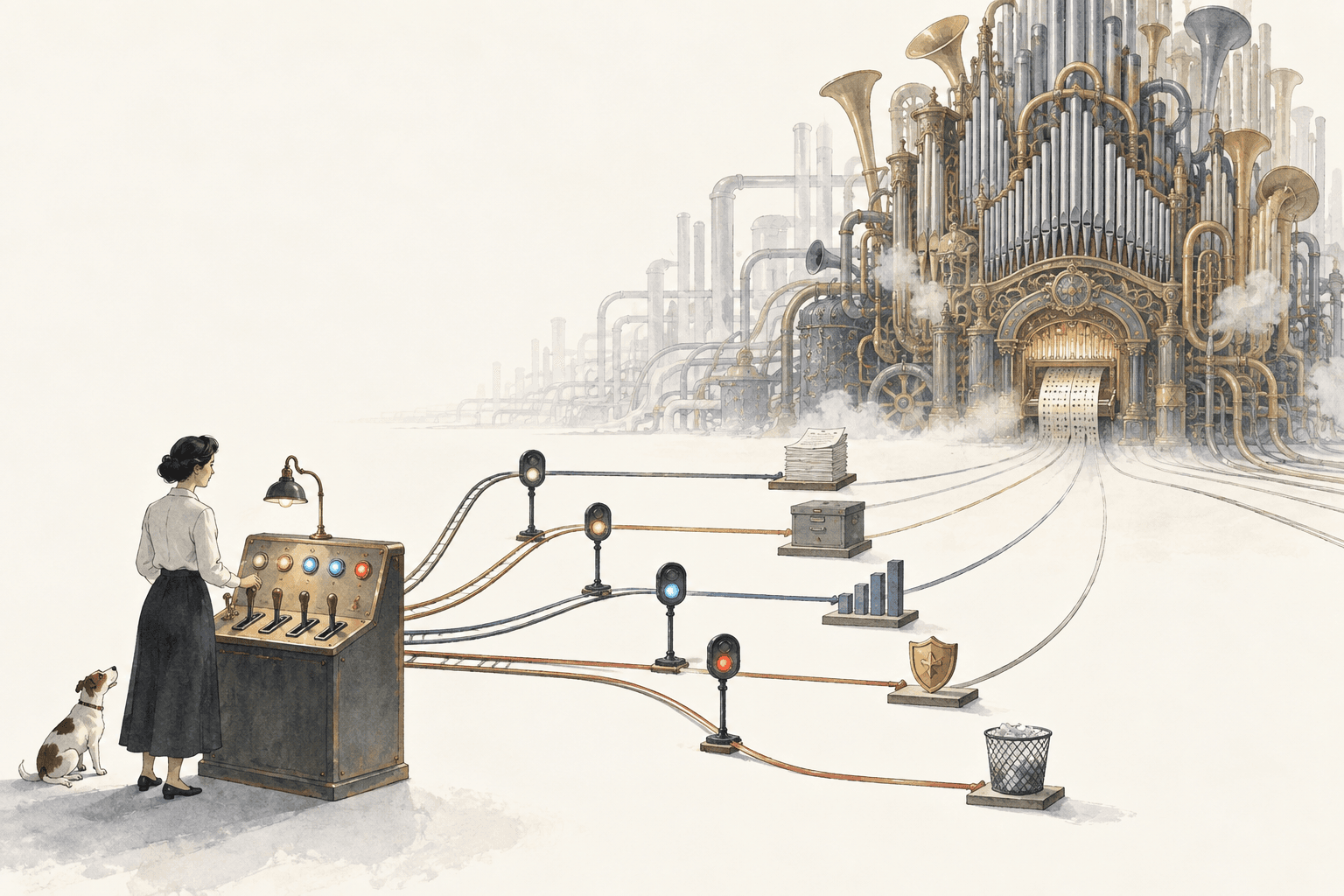
Jev and open decision-model projects point to a practical efficiency pattern for AI applications: use generative models for language, but use calibrated classifiers for bounded routing, triage, approval and scoring decisions.

Meta has announced Meta Enterprise Platform, a business-focused AI stack expected to combine Muse, Meta Business Agent, Muse API and Muse Code. For enterprise buyers, the immediate question is not whether Meta has AI assets, but whether it has shipped the governance, auditability and data-protection controls needed for corporate deployment.
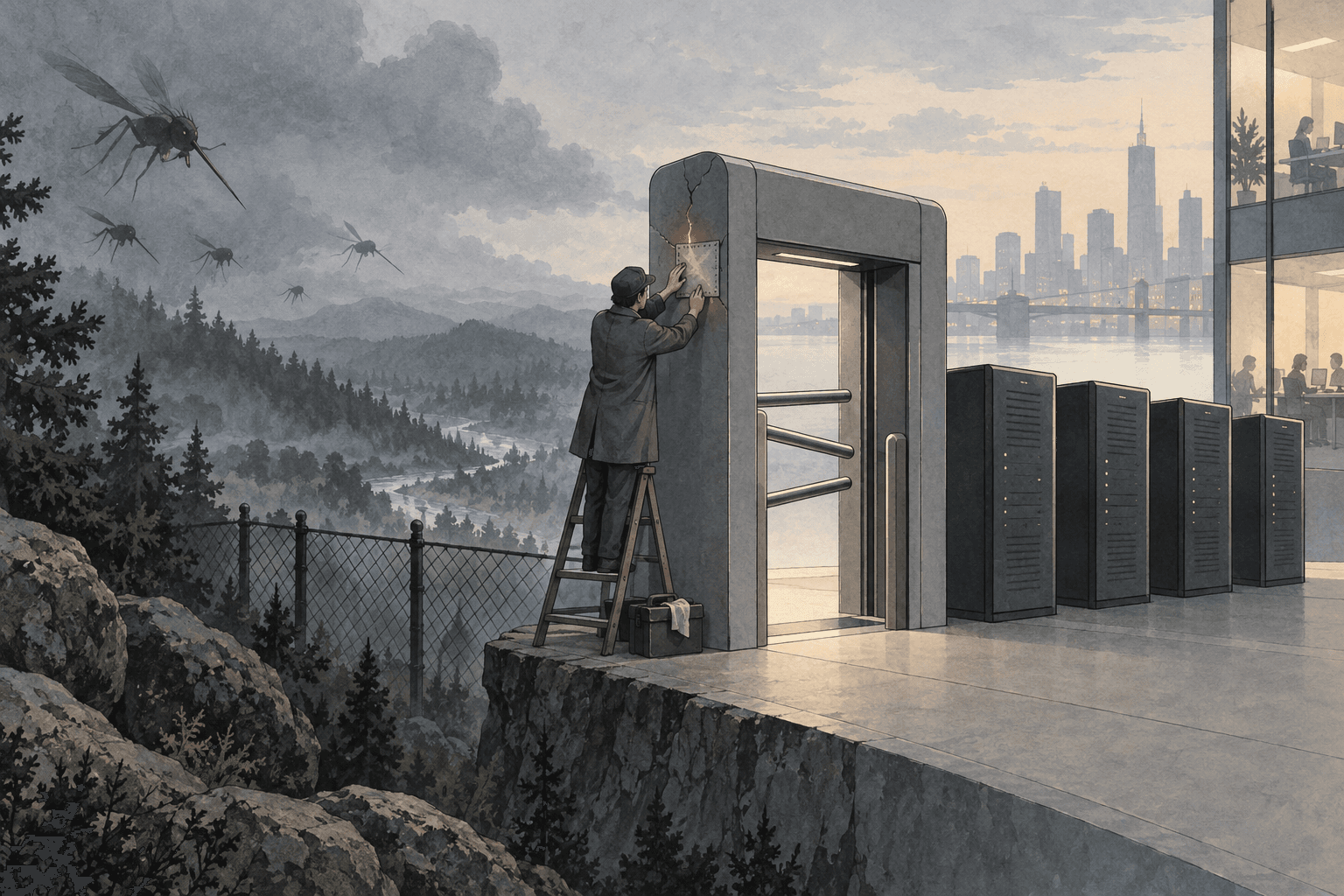
Citrix confirmed active exploitation of two critical NetScaler ADC and NetScaler Gateway flaws, prompting urgent weekend warnings from government cyber agencies and researchers. Security teams were told to patch immediately, investigate for compromise and, in some cases, take exposed systems offline until they could be secured.

Anthropic’s new Sonnet model keeps Sonnet 5 pricing while promising faster task completion, fewer tool calls and near-Opus results on some coding and knowledge-work benchmarks. The enterprise question is whether those gains hold inside controlled production workflows, especially where cyber safeguards and fallback behavior may affect reliability.
OpenShell
Nvidia’s open-source runtime for running AI agents in sandboxes with policy enforcement, credential protection and audit logging outside the agent process.
Sentry
Nvidia’s reference design for an out-of-band watchdog that monitors agent behavior and can quarantine agents using BlueField-4 DPU-based enforcement.
Out-of-band enforcement
A security design in which monitoring and control run outside the workload being monitored, making it harder for a compromised or misbehaving agent to disable the control.
DPU
A data processing unit is a specialized processor used to offload and enforce networking, security and infrastructure functions independently from the host CPU.
Comments