Claude Sonnet 5.5 tests enterprise shift from premium AI tiers

Same API price
Claude Sonnet 5.5 keeps Sonnet 5 pricing at $2 per million input tokens and $10 per million output tokens.
Workflow savings
Anthropic says the model runs more than 30% faster and can reduce cost per task by up to 30% through fewer tokens and tool calls.
Fallback risk
Cyber safeguards may route higher-risk security requests away from Sonnet 5.5 to Sonnet 5 or block them, adding a production-control variable.
Anthropic released Claude Sonnet 5.5 on September 28 with a clear enterprise pitch: many coding, document and agent workflows may no longer need the company’s most expensive frontier tier. The model keeps Claude Sonnet 5 API pricing at $2 per million input tokens and $10 per million output tokens. Anthropic says it generates outputs more than 30% faster and can cut cost per task by up to 30% through lower token use and fewer tool calls.1
For enterprise AI builders, the headline is not that Sonnet 5.5 tops selected benchmarks. It is that Anthropic is trying to move more routine production work — bug fixing, support workflows, document review, spreadsheets, slide generation and bounded agents — into a cheaper Sonnet-class model without giving up too much reliability or control.3
The evidence is promising but uneven. Anthropic reports large gains over Sonnet 5, including 70.6% on Terminal-Bench 4.0 versus 10.3% for Sonnet 5, 55.5% on CursorBench 4.0, and near-parity with Opus 5.5 on GDPval-AA and AA-Briefcase, two work-oriented evaluations.1 VentureBeat framed those results as narrowing the gap between the Sonnet and Opus tiers, while noting Anthropic’s view that Opus 5.5 remains stronger for ambiguous, open-ended work requiring sustained judgment.3
Independent checks complicate the cost story. Artificial Analysis found Sonnet 5.5 reached a score of 56 on its Intelligence Index, two points behind Opus 5.5 at max effort. But it also reported the highest output-token use it had measured at max effort — about 193,000 output tokens per Intelligence Index task — and an estimated $7.60 cost per task, roughly 50% higher than Sonnet 5 in that configuration.4 In other words, Sonnet 5.5 may be cheaper when it finishes work in fewer steps, but it is not automatically cheaper at every effort setting or benchmark mix.
Anthropic’s launch materials distinguish between per-token pricing and per-task economics. Sonnet 5.5 costs the same as Sonnet 5 on core API rates and less than Opus 5.5, which Anthropic lists at $4 per million input tokens and $20 per million output tokens.1 The claimed savings come from faster generation, fewer output tokens in many tasks and fewer tool calls in agentic workflows.
That distinction matters for enterprise deployments. In a support agent, coding assistant or back-office automation pipeline, the bill is not just model inference. It includes tool executions, retries, orchestration latency, human review and failure handling. If a model completes a workflow in fewer steps, it can reduce total operating cost even without a headline price cut.3
Customer-reported results support that possibility, but they should be treated as early, workload-specific evidence rather than general proof. Anthropic’s launch page says Slack saw better offline Slackbot evaluation results with roughly 14% fewer output tokens; Zendesk reported support tickets processed 20% faster; Box reported 2.4x faster processing and 12% fewer total tokens; Lovable reported one-third fewer tool calls and about half as many shell runs; and Base44 reported Sonnet 5.5 matched Opus 5 across 118 app builds, with 3.6 iterations per build versus 7.7 for Opus 5.1 VentureBeat cited the same customer testing as evidence that fewer steps and failed actions may matter as much as leaderboard position.3
The strongest near-term use case is not replacing premium models everywhere. It is routing well-scoped work to Sonnet 5.5 while reserving Opus-class systems for tasks where uncertainty, architectural judgment or high-stakes review justify the premium.
Anthropic’s benchmark table shows Sonnet 5.5 close to Opus 5.5 in several work-oriented tasks: 1844 versus 1846 on GDPval-AA, 1811 versus 1822 on AA-Briefcase, 80.1% versus 81.8% on OSWorld 2.1, and 61.6% versus 64.4% on Chartography.1 The company says Sonnet 5.5 at lower effort settings can beat Sonnet 5’s best score at a fraction of the cost on several evaluations. It also says Claude Code and consumer apps default to Medium effort, while the Claude Platform defaults to High.1
The system card is critical for interpreting those numbers because it contains Anthropic’s technical evaluation details, benchmark methodology, alignment testing, cyber capability assessment and fallback behavior.2 One important caveat appears in Anthropic’s footnotes: Artificial Analysis ran GDPval-AA and AA-Briefcase on a prerelease deployment with a structured-output bug that Anthropic says has since been fixed and may have slightly understated performance.1
Independent evaluators give a more cautious picture. Artificial Analysis confirmed major gains but said high-effort Sonnet 5.5 sits off its intelligence-versus-cost Pareto frontier in some comparisons because of heavy output-token use.4 It also observed a roughly 0.1% fallback rate across its Intelligence Index tasks, primarily in Terminal-Bench 4.0, with fallback to Sonnet 5 in all cases.4
Electricity Bench, which evaluates Claude Code on real-world coding issues, rated Sonnet 5.5 C- overall, with 12 of 15 tasks solved on its real-world issues suite, 37-second median task time and 100% reliability in the measured run.5 That result is encouraging for high-volume coding assistance, but it also shows that production-like task sets can produce more modest grades than top-line launch benchmarks suggest.
For business automation, BenchLM lists Sonnet 5.5 at 44.7% on AutomationBench Zapier 1.0.6, a benchmark for simulated workflows across 47 applications. But BenchLM explicitly flags the row as provider self-reported, display-only evidence, not an independent run used for ranking.6 Enterprises should treat that as a signal worth testing, not a procurement-grade answer.
Sonnet 5.5 is also a safety-policy change. Anthropic says the model’s cyber capabilities are a major improvement over Sonnet 5, so it is launching with cyber safeguards and fallbacks similar to those used for more capable models. Routine software development and bug fixing are supposed to remain available, while higher-risk cybersecurity tasks may visibly fall back to Sonnet 5.1
The Help Center documentation says Anthropic’s real-time cyber safeguards are designed to detect and block requests that may indicate prohibited or high-risk cybersecurity usage. It identifies two major categories: prohibited activities such as mass data exfiltration or ransomware code development, and high-risk dual-use work such as vulnerability exploitation or offensive security tooling, where legitimate defenders may seek access through the Cyber Verification Program.7
This matters for enterprise control. A bank, software vendor or security company may want stronger safeguards to reduce misuse risk, but it also needs predictable behavior in authorized security, compliance and remediation workflows. Anthropic says the Cyber Verification Program is intended to let legitimate professionals continue dual-use work safely. But the Help Center notes that the program is not available through every access path, including Amazon Bedrock at the time of publication, and that zero-data-retention organizations are not currently eligible through the standard route.7
For builders, fallback behavior should be tested like any other production dependency. If a request silently or visibly shifts from Sonnet 5.5 to Sonnet 5, output quality, latency and audit expectations may change. If a workflow is blocked, teams need escalation paths, logging and user messaging. If the same model is used for ordinary code generation and security review, routing logic should distinguish between safe secure-coding tasks and dual-use requests likely to trigger controls.
The practical migration path is selective routing. Enterprises should benchmark Sonnet 5.5 against Opus 5.5 and existing Sonnet 5 deployments on their own task distributions, not just public leaderboards. The most relevant measurements are task success rate, median and tail latency, output-token use, number of tool calls, failed tool calls, retry rate, human-edit distance and safeguard-trigger rate.
A good pilot would start with bounded workflows: routine pull-request review, bug triage, document extraction, slide or spreadsheet drafting, internal helpdesk responses, and agent tasks with clear tool permissions. Teams should compare Medium and High effort settings because Anthropic’s launch materials and independent analysis both indicate that effort level can materially change the cost-quality tradeoff.14
The model should not be treated as an automatic substitute for premium frontier systems. Opus 5.5 still appears better suited to open-ended architecture, complex planning and judgment-heavy synthesis. But Sonnet 5.5 gives enterprise AI teams a stronger candidate for the default lane: the model that handles the bulk of work, escalates difficult cases upward and stays within policy boundaries.
The core question after this launch is operational, not rhetorical. If Sonnet 5.5 can reliably complete routine workflows faster, with fewer tool calls and acceptable safeguard behavior, enterprises can lower average inference and orchestration cost without abandoning frontier capability. If the gains depend on narrow benchmarks, high token budgets or unpredictable fallbacks, the premium tier will remain the safer default for more production workloads.
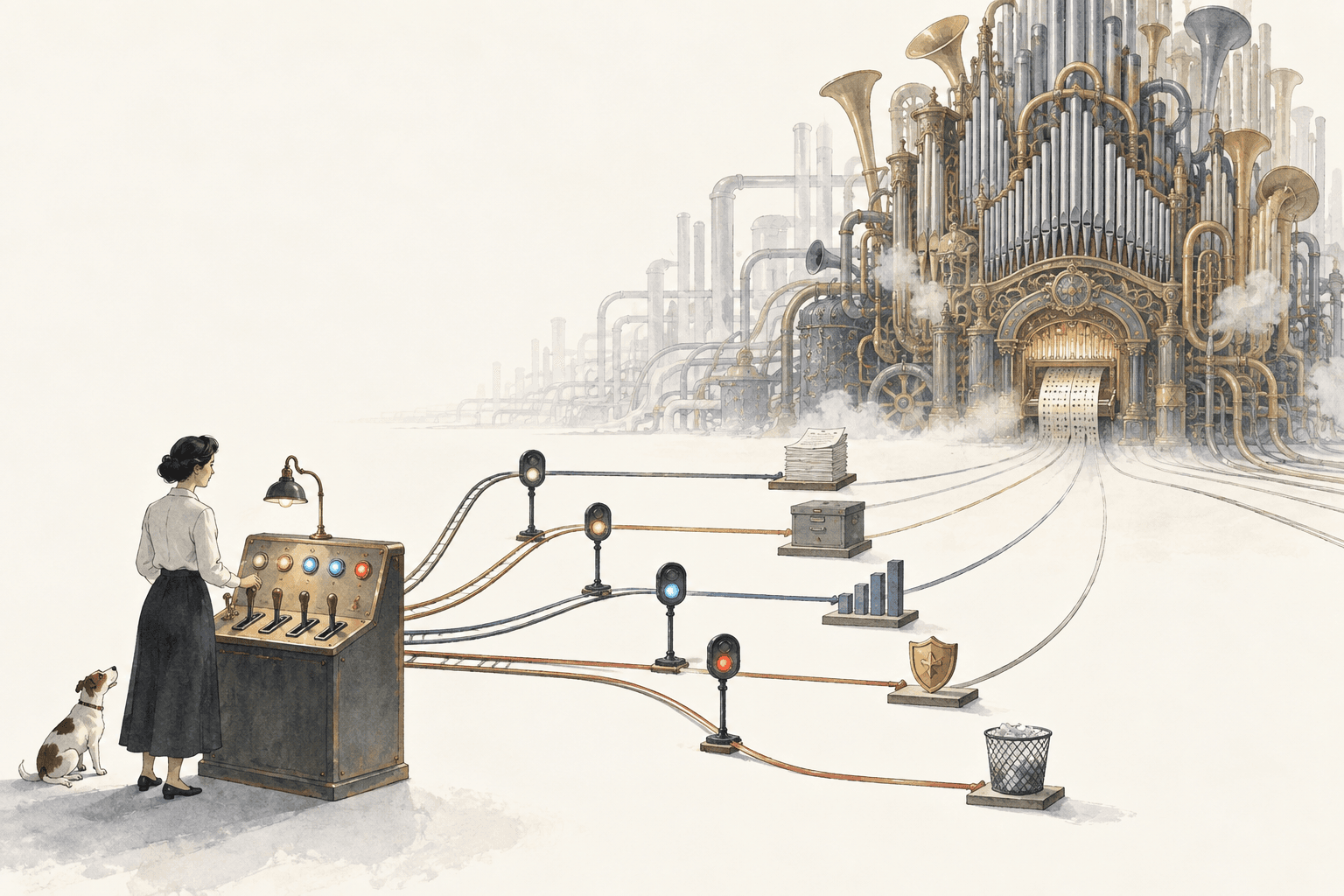
Jev and open decision-model projects point to a practical efficiency pattern for AI applications: use generative models for language, but use calibrated classifiers for bounded routing, triage, approval and scoring decisions.

Meta has announced Meta Enterprise Platform, a business-focused AI stack expected to combine Muse, Meta Business Agent, Muse API and Muse Code. For enterprise buyers, the immediate question is not whether Meta has AI assets, but whether it has shipped the governance, auditability and data-protection controls needed for corporate deployment.

Citrix confirmed active exploitation of two critical NetScaler ADC and NetScaler Gateway flaws, prompting urgent weekend warnings from government cyber agencies and researchers. Security teams were told to patch immediately, investigate for compromise and, in some cases, take exposed systems offline until they could be secured.

Nvidia’s Open Agent Safety Platform combines the open-source OpenShell runtime with a BlueField-4-based Sentry watchdog design, shifting AI agent safety toward enforceable runtime boundaries, logging and out-of-band monitoring. The approach may address sandbox escapes and unauthorized tool use, but it still depends on policy quality, deployment discipline and, for the strongest controls, Nvidia hardware.
Cost per task
The total cost of completing a workflow, including model tokens, tool calls, retries and failures, rather than only the posted token price.
Effort setting
A model configuration that changes how long the model reasons and checks its work, affecting speed, token use and quality.
Fallback behavior
A safety or routing mechanism that shifts a request from one model to another, such as from Sonnet 5.5 to Sonnet 5, when certain controls are triggered.
Dual-use cyber task
A cybersecurity request that can be legitimate for defenders but could also be misused offensively, such as exploit testing or offensive security tooling.
Comments