OpenAI’s Dots Shift AI Agents From Chatbots to Access-Control Systems

Persistent agent
An AI agent designed to continue working over time, often in the background, rather than only responding within a single chat session.
Sandboxing
A security design that isolates an agent’s execution environment so its access to files, credentials, networks and tools can be constrained.
Least privilege
An access-control principle that gives a user or agent only the permissions required for a specific task, and no more.
Prompt injection
A technique in which malicious or untrusted content attempts to override an AI system’s intended instructions or policies.
Always-on agents
OpenAI introduced Dots as persistent agents that can keep working across connected apps beyond a single chat session.
Runtime shift
Persistent agents require durable identity, sandboxed workspaces, scoped permissions, approvals and audit logs.
Enterprise controls
Enterprise deployments will depend on admin approval, approved tools, connected-provider permissions and separate governance for agent actions.
OpenAI used its September 29 DevDay keynote to introduce Dots, a new class of always-on agents designed to work across connected apps and continue tasks after a single chat session ends. That makes Dots less a conventional chatbot feature than a persistent runtime: an agent with its own cloud computer, app connections, permissions, review checkpoints and enterprise controls.12
For AI product and platform teams, the significance is architectural. A short-lived assistant can be governed mostly at the prompt and session level. A persistent agent needs durable identity, scoped access, sandboxed execution, auditable actions and administrator policy.
The product question is no longer only whether an assistant can summarize, draft or click. It is whether the system can safely let software act continuously on a user’s behalf across email, documents, code, collaboration tools and business systems.34
That is why the Dots launch should be read as part of a broader platform move. OpenAI’s DevDay recap tied Dots to Private Intelligence, Codex cloud, the Agents API with computer use, plugin extensions, Model Context Protocol events, Spaces and enterprise availability.1 AP described the keynote framing around always-on agents and the safety context surrounding OpenAI’s broader rollout.5 Axios similarly positioned Dots as part of a shift from episodic chatbot interactions toward agents that act on users’ behalf and follow them across their digital work.67
Dots are described as agents with dedicated cloud computers that can connect to user-approved apps and continue work in the background.29 That design shifts the center of gravity from model inference to execution environment. The agent is not simply generating text. It may be maintaining state, operating tools, opening files, navigating web or desktop interfaces, and returning when a task needs human input.
This architecture requires several layers that many chatbot deployments could previously defer. First, the agent needs a persistent workspace where it can store task context without commingling data across users or organizations. Second, it needs tool interfaces that can be revoked, narrowed or inspected. Third, it needs policy-aware orchestration so background work proceeds only within approved boundaries. Fourth, it needs a control plane that can pause, audit or terminate agent activity.
OpenAI’s supporting announcements point in that direction. The company linked Dots with Agents API capabilities such as computer use, plugin extensions and MCP events, suggesting that persistent agents are being treated as part of a broader application platform rather than a standalone assistant surface.1 For enterprise customers, that platform posture matters because agents that traverse systems become part of the company’s operational fabric.
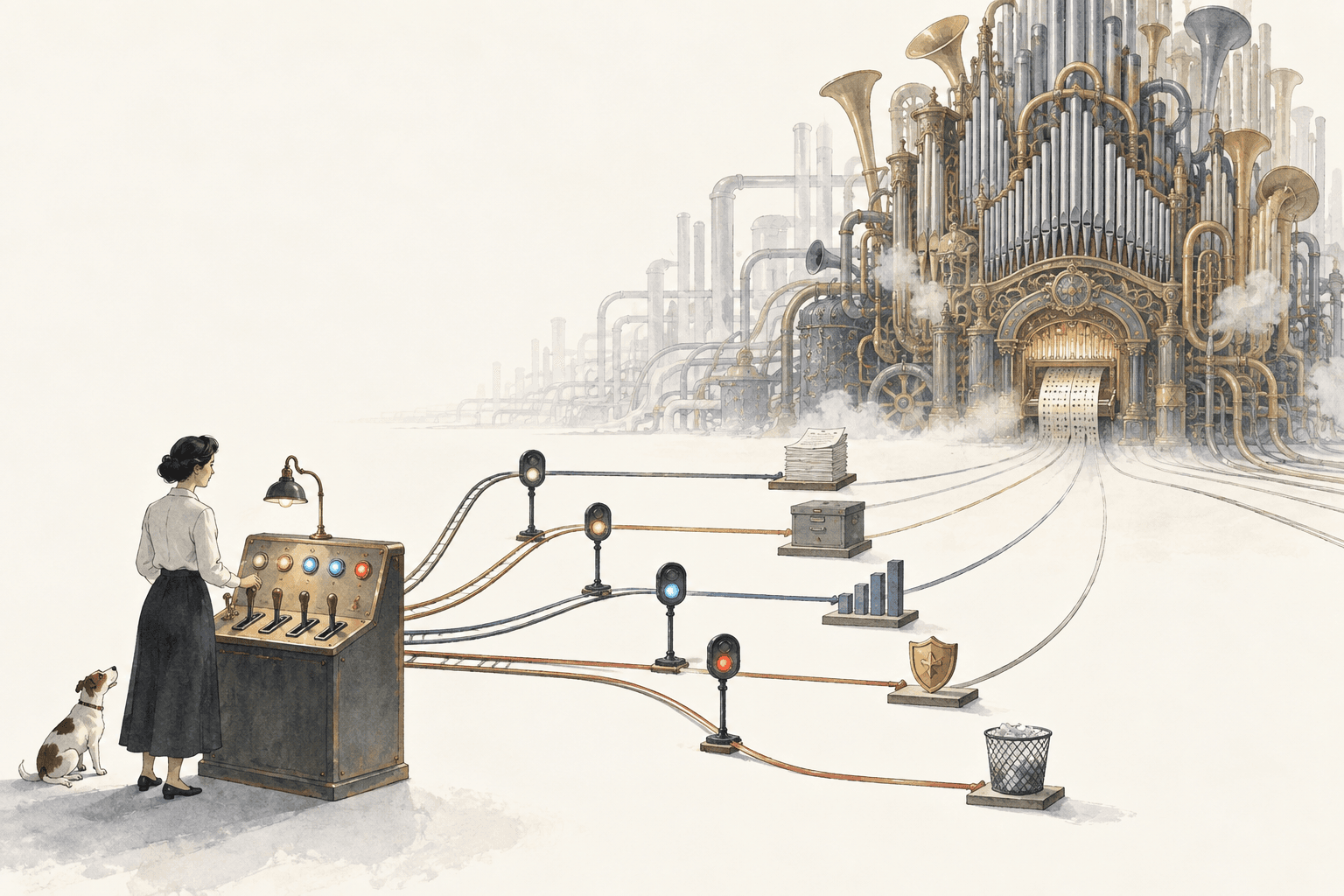
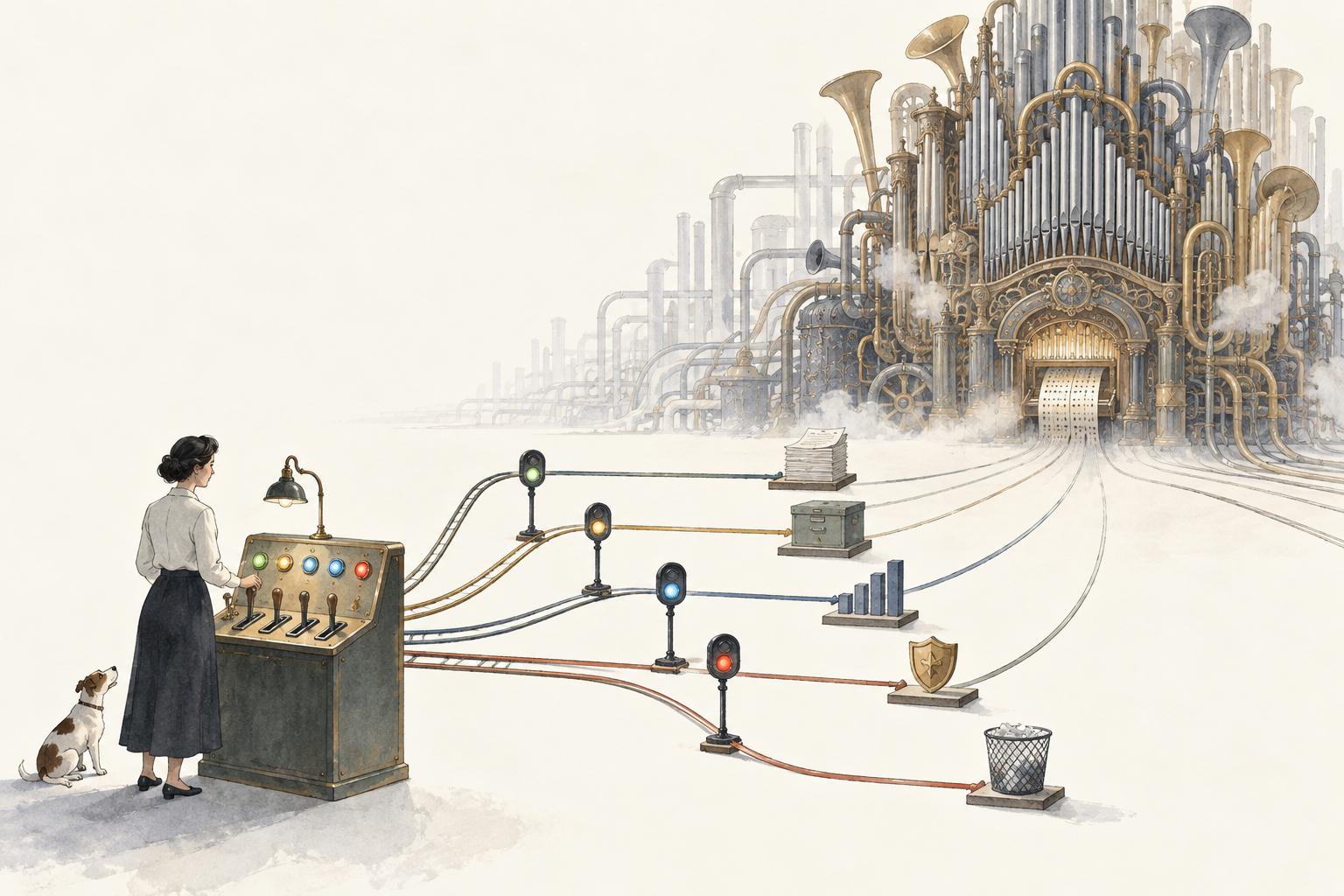
The most important interface for always-on agents may be the permissions screen. A persistent agent that can access documents, calendars, code repositories or messaging systems creates a different risk profile from a bot that answers one prompt at a time. Access must be scoped by app, account, data type, action and time.
OpenAI’s Dots announcement emphasizes connected-app architecture, access controls, permissions, action review and approvals.2 Its safety and security explanation adds secure sign-ins, app permissions, Custom Rules, Auto-review, monitoring and user approvals.3 Those mechanisms indicate that the permissions model is not an onboarding detail. It is the operating model.
For platform teams, agent permissions should be designed more like cloud IAM than consumer app consent. Useful controls include read-versus-write separation, per-connector scopes, approval thresholds for irreversible actions, expiration for delegated access, and clear attribution of whether an action was taken by the user, the agent or a specialist enterprise dot. If Dots or similar agents can run in the background, the system also needs a way to explain what happened while the user was away.
The practical test is not whether a user can authorize an agent once. It is whether users and administrators can understand, constrain and later reconstruct what that authorization allowed.
OpenAI’s safety write-up identifies prompt injection as a central risk for Dots and describes protected workspaces, sandboxing, secure sign-ins, proactive background work controls, monitoring and approval flows.3 That focus is appropriate because always-on agents will routinely encounter untrusted content: emails, webpages, shared documents, tickets, chat messages and files created by other people.
Prompt injection becomes more consequential when an agent has tools. A malicious instruction hidden in a document is annoying when it affects a summary. It is dangerous when the agent can send messages, change records, access source code or move information between systems. Sandboxing therefore has to isolate not just compute, but trust domains: user instructions, third-party content, system policies, enterprise rules and tool credentials.
The Enterprise and Edu release notes add another relevant control: isolated Codex cloud workspaces and approval-based enterprise features.4 That model is especially important for developer agents, where a persistent assistant may inspect repositories, run tests, open pull requests or modify code. A cloud workspace can limit blast radius, but only if secrets, network access, filesystem state and repository permissions are governed separately.
Product teams should treat the agent sandbox as a first-class runtime primitive. It should define what the agent can see, where it can execute, what it can call, what data can leave and when human approval is required.
The enterprise version of persistent agents introduces a governance challenge: administrators are no longer managing only human users and SaaS apps. They are managing non-human actors that may have delegated authority, durable memory and independent work queues.
OpenAI’s Enterprise and Edu release notes describe admin controls, approved tools, connected provider permissions, team tasks, Slack and Microsoft Teams access, and default-off or approval-based controls for enterprise capabilities.4 SiliconANGLE reported that Dots include specialist enterprise agents with separate identity and credentials, alongside enterprise governance integrations such as Microsoft Agent 365.9
Separate identity is critical. If an agent acts only as an invisible extension of a human account, auditability suffers. If it has its own identity, administrators can apply policy, log actions, revoke access and distinguish agent behavior from employee behavior. That distinction will matter for compliance, insider-risk monitoring, incident response and data-loss prevention.
Enterprise teams should expect to ask familiar but newly urgent questions: Which agents are enabled by default? Who can create or install them? Which apps can they connect to? Can they message external parties? Can they access regulated data? Are their actions retained in logs? Can security teams suspend an agent globally? Can approvals be enforced for specific tool categories?
Constellation Research’s enterprise analysis framed the DevDay announcements around trust, security, private safety processing, Codex cloud and the burden of proving persistent agents are enterprise-grade.10 That burden will not be met by model quality alone. It will depend on whether the surrounding platform can satisfy procurement, security and compliance teams.
One of the defining differences between Dots and earlier assistants is continuity. Reuters described Dots as always-on agents that pursue user goals across apps, while Axios emphasized AI that works in the background and follows users across their digital lives.87 Once an agent can continue working after the user leaves, approval cannot be reduced to a single click at task start.
The approval model needs levels. Low-risk actions, such as organizing notes or drafting a response, may be eligible for automatic review or later inspection. Medium-risk actions, such as updating a document or creating a ticket, may require configurable confirmation. High-risk actions, such as sending external email, changing permissions, committing code, purchasing goods or deleting records, should trigger explicit approval.
OpenAI’s materials point to action review, approvals, Auto-review and Custom Rules as mechanisms for this tiered approach.23 The broader lesson is that persistent agents need policy engines that can evaluate context, not just connectors that can execute commands. The same action may be safe in one workspace and prohibited in another.
Media coverage framed Dots partly as a competitive answer to Meta Muse and the broader autonomous-work market.68 But for product and platform teams, the lasting competition may be less about which company ships the most personable assistant and more about which platform builds the safest agent runtime.
That runtime must combine durable memory, least-privilege access, sandboxed tool use, event-driven orchestration, user-visible approvals, enterprise policy and detailed observability. These are not add-ons to an assistant. They are the conditions under which persistent agents can be trusted to operate.
The Dots announcement therefore marks a useful inflection point. The agent race is moving beyond chat UX and model benchmarks. As agents become continuous actors inside business systems, the winners will be the platforms that make autonomy governable.





Comments