Google frames health AI as a stack for discovery, diagnosis and outbreak response
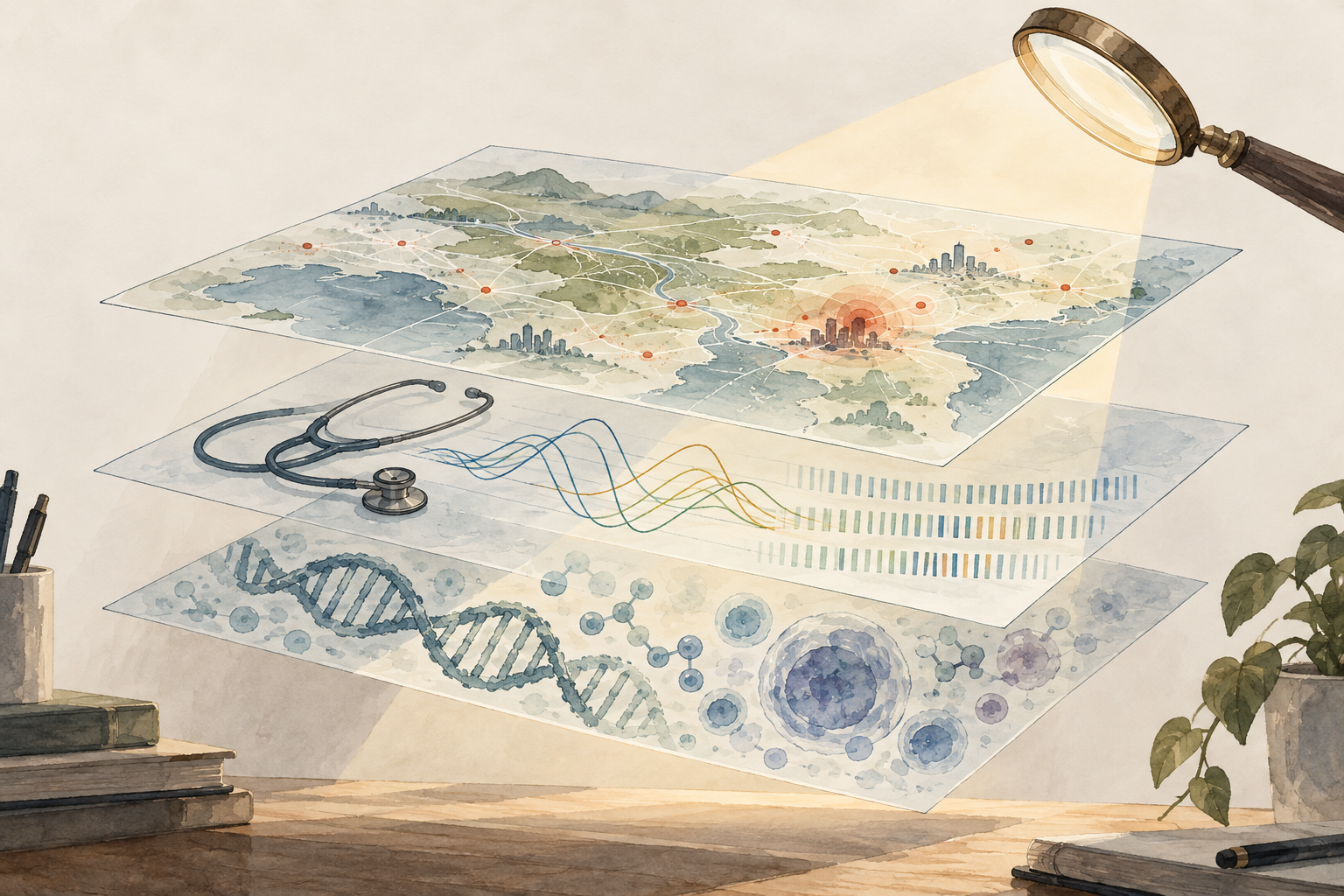
Cancer screening
Google says its mammography system found 25% of historically missed interval cancers in studies involving 125,000 women.
Rapid genomics
DeepVariant and DeepConsensus supported whole-genome diagnosis in less than eight hours in a Stanford clinical-trial setting.
Outbreak forecasting
Google says geospatial models helped WHO AFRO and the DRC’s INRB identify Ebola transmission risks sooner.
Google is presenting a broad set of health-AI projects as an applied stack for understanding disease, supporting diagnosis and preparing for outbreaks. But the projects vary sharply in maturity: some are peer-reviewed clinical studies, some are open-access research tools, and others are deployment or partner-use claims that stop short of broad clinical availability.1
The October 12 update spans AlphaFold-enabled drug discovery, AlphaGenome Atlas, rapid genetic diagnosis, AlphaProtein Novo, cancer-screening research, DeepSomatic, Google Earth AI and flu forecasting.1 The common message is that Google wants its models to operate across the health pipeline, from molecular discovery and laboratory validation to clinical and public-health workflows.
The most concrete clinical-use examples are not general product launches. Google says DeepVariant and DeepConsensus were used with Stanford University School of Medicine in a clinical trial that achieved whole-genome diagnosis in less than eight hours for time-critical genetic disease cases.1 It also says Children’s Mercy Hospital applied DeepSomatic to previously sequenced real-world childhood leukemia cases, confirming known variants and finding 10 previously missed mutations.1
In public health, Google says WHO AFRO and the Democratic Republic of Congo’s National Institute of Biomedical Research used conversational geospatial models to identify Ebola exposure and transmission risks sooner, helping local responders deploy mobile laboratories proactively.13
Google’s framing is broader than a single medical product. The company says its health work covers “fundamental cellular discovery,” laboratory tooling and patient impact. It also says its teams have published 90 peer-reviewed papers on understanding and addressing disease over the past five years, with more than 90,000 citations.1 Secondary coverage described the announcement in similar terms: disease detection, treatment and prevention through technology, rather than a narrow diagnostic release.56
That packaging matters because the cited systems sit at different points in the evidence chain. AlphaFold is being used by researchers to screen drug candidates. AlphaGenome Atlas is an open catalog for variant-effect prediction. DeepVariant and DeepConsensus are sequencing-analysis tools used in a Stanford clinical trial. Mammography models were evaluated in studies with Imperial College London and the UK National Health Service. Google Earth AI is being positioned for public-health forecasting.1
The result is an applied-health narrative: discovery models generate biological hypotheses, diagnostic models interpret patient data, and geospatial models help public-health teams anticipate disease spread. But the announcement does not mean all of these systems are deployed in routine care, reimbursed, regulated or available at every hospital.
Several of the strongest claims are tied to peer-reviewed or formal clinical-research settings. Google cites a pair of Nature Cancer studies with Imperial College London and the UK National Health Service evaluating a mammography screening system across 125,000 women.1 The system identified 25% of historically missed interval cancers and showed the possibility of reducing specialist reading workload by up to 40%.12
That is a significant screening result, particularly given radiologist shortages. But it should be read as an evaluation claim, not proof of universal performance in every screening program. A Japanese analysis of the Google announcement made the same distinction, warning that the reported workload reduction does not mean every hospital would see the same effect or that the tool is locally available in Japan.4
The ultrarapid genetic-diagnosis example is also framed around a clinical trial with Stanford University School of Medicine, where DeepVariant and DeepConsensus supported whole-genome sequencing diagnosis in less than eight hours.1 Secondary coverage highlighted the same “under eight hours” figure as one of the headline clinical claims.23
DeepSomatic sits closer to translational genomics. Google says Children’s Mercy Hospital used it on previously sequenced childhood leukemia cases, where it confirmed all known variants and detected 10 mutations that had previously been missed.1 The company describes DeepSomatic as publicly available and says it has the potential to inform risk assessment and targeted-treatment decisions. But “potential” is doing important work: this is not the same as a claim that the model independently determines treatment in routine oncology care.
Google also emphasizes tools intended for researchers rather than directly for clinicians. AlphaGenome Atlas is described as a comprehensive catalog of predictions for how single-letter changes in the human genome affect molecular biology.1 Google says University of Exeter researchers used it to analyze genomic data from more than 54,000 people and identify variants affecting circulating proteins, including PLA2G7 and EGLN1.1
AlphaFold remains central to the discovery layer. Google says researchers at the Institute for Global Health, Barcelona used AlphaFold to virtually screen 30,000 compounds for activity against Chagas disease, identifying two already FDA-approved drugs as possible repurposing candidates.1 Coverage in Japan correctly noted that this is a candidate-identification result, not a finding that those drugs are established Chagas treatments.4
Google also points to open neural-mapping resources, including a nanoscale reconstruction of a human brain fragment produced with Harvard’s Lichtman Lab and made available through Neuroglancer.1 These datasets are enabling infrastructure for neuroscience, not clinical systems.
AlphaProtein Novo is a different case. Google describes it as a machine-learning pipeline for designing new-to-nature enzymes and says lab tests showed designed enzymes could synthesize drug motifs or degrade toxic plastics under extreme conditions.1 Because the cited work is presented as a bioRxiv preprint, it should be treated as promising but not yet peer-reviewed in the same way as the mammography papers.
The clearest clinician-facing example is the Stanford trial. Google says DeepVariant and DeepConsensus were used in a clinical-trial setting to support urgent whole-genome diagnosis.1 That is a real clinical context, but still a trial rather than a general rollout.
Children’s Mercy’s use of DeepSomatic is another concrete medical-center example. The system was applied to real-world pediatric leukemia sequencing data and found mutations missed in earlier analysis.1 The practical implication is diagnostic support for variant discovery, not replacement of oncologists, pathologists or molecular tumor boards.
For mammography, the evidence is strong as a large evaluation with NHS-linked screening data. But the October 12 update does not say the system is now routinely deployed across the NHS or available in hospitals generally.14 The distinction is important: a retrospective or prospective study can show performance and workflow potential without proving systemwide implementation.
For public health, Google’s most specific deployment claim involves WHO AFRO and the Democratic Republic of Congo’s INRB. Google says conversational geospatial models replaced weeks of manual coding and helped identify Ebola exposure and transmission risks sooner, enabling earlier mobile-lab deployment.13 That is a public-health partner-use claim, not a consumer-facing health product.
The flu-forecasting example is also operationally relevant. Google says its flu forecasting model ranked first among 39 systems in the U.S. Centers for Disease Control and Prevention’s 2025–2026 evaluation for predicting flu-related hospital admissions.12 The claim is about forecasting accuracy in a public-health benchmark, not direct diagnosis of individual patients.
Google’s health-AI update is strongest when read as a map of applied research moving toward deployment. Its portfolio connects protein structure, variant interpretation, genome sequencing, cancer screening and outbreak forecasting into one health-technology narrative.1
But health AI is not a single maturity category. Peer-reviewed cancer-screening research, public open-access datasets, preprint enzyme-design work, clinical-trial sequencing support and public-health outbreak forecasting each carry different evidentiary and regulatory implications.
That is the key takeaway for health-tech readers: Google is not merely publishing isolated research papers. It is assembling a discovery-to-deployment story in which AI models help generate biological hypotheses, triage diagnostic data and support public-health decisions. The practical impact will depend on which systems move from studies and partner pilots into validated, regulated and locally adopted clinical workflows.

Apple is expected to use its private October 13 New York launch to introduce a new HomeView smart-home hub, refreshed HomePod mini and updated Apple TV 4K. The key question is whether the shipped devices make Apple Home easier to control, automate and connect across households—not whether they simply expand Apple’s ecosystem.

Security reports published October 12 said attackers are actively chaining two AhsayCBS flaws to plant JSP webshells and XMRig miners on backup management servers. Ahsay has issued new hotfix guidance after saying earlier fixes did not fully address CVE-2026-105133 and CVE-2026-105134.

GitLab’s October 12 patch release fixes CVE-2026-97229, a CVSS 10.0 vulnerability that could allow unauthenticated arbitrary code execution through crafted regular expressions in CI/CD configuration. Platform teams running self-managed GitLab CE or EE should prioritize upgrades to 19.4.2, 19.3.5 or 19.2.8.

Meta launched Muse Wonder and Muse Wonder Full as frontier models for personal and professional agents, with persistent memory and long-running task focus at the center of the pitch. The release moves Meta’s AI story toward agent infrastructure, but key safety and privacy details remain incomplete.
Interval cancer
A cancer diagnosed after a negative screening result but before the next scheduled screening, often used to evaluate missed cases in screening programs.
Whole-genome sequencing
A method that reads nearly all of a person’s DNA to look for genetic variants that may explain disease.
Open-access tooling
Research software, datasets or prediction resources made available for scientists to use, often before they become clinical products.
Geospatial AI
AI that analyzes location-linked data such as weather, environment, mobility and population patterns to support decisions such as outbreak response.
Comments